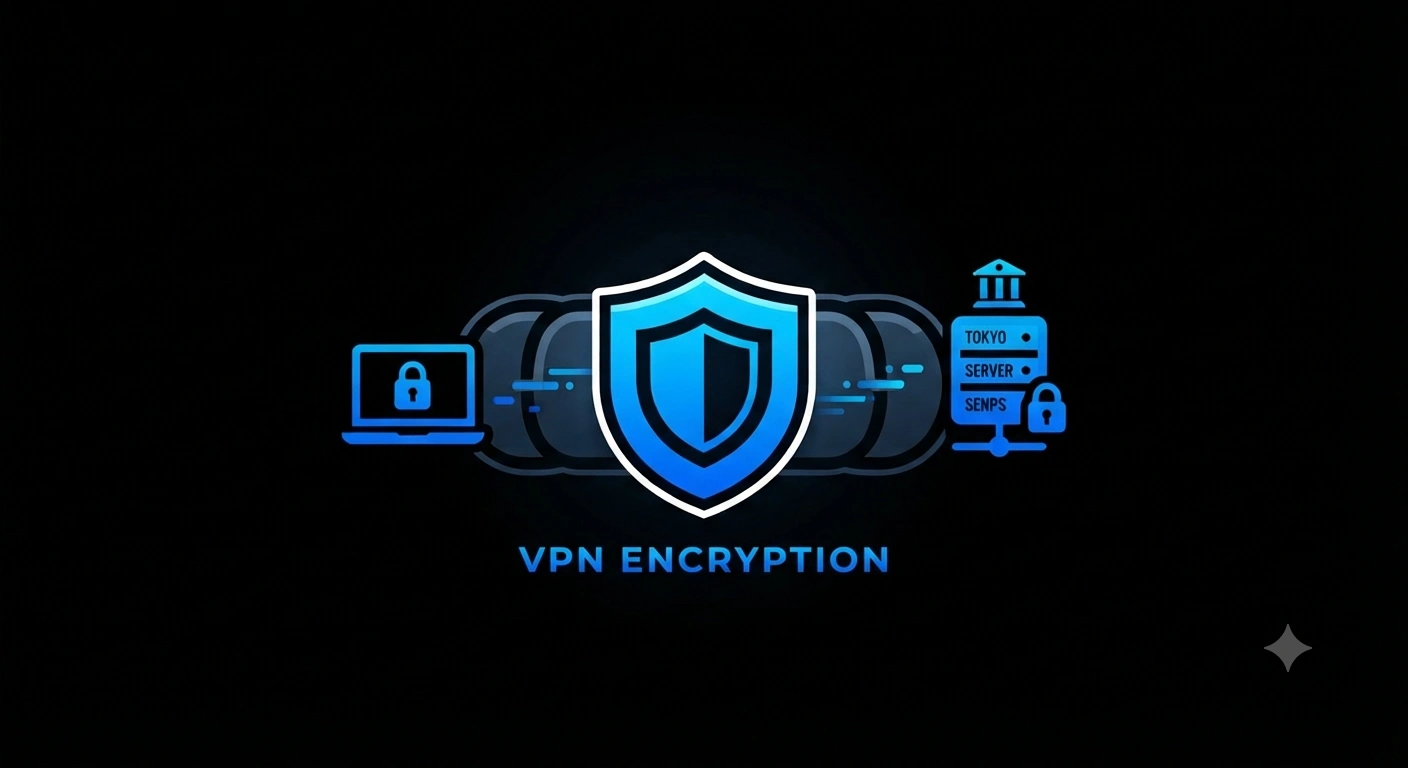
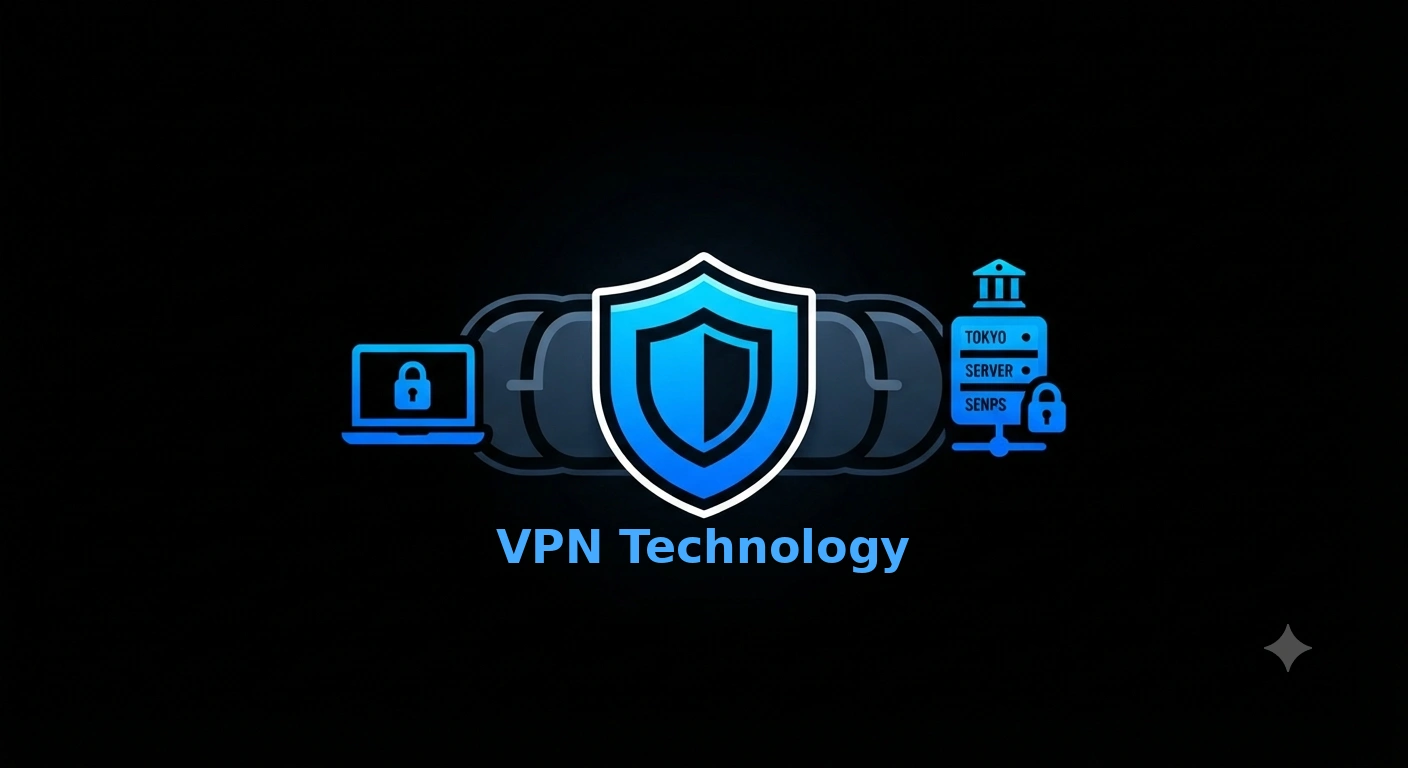
"Military-grade encryption" appears on nearly every VPN's homepage, but the phrase explains almost nothing on its own. Here is what VPN encryption actually is, how it works, and — just as importantly — what it does and doesn't protect against.
The Basic Idea
Encryption scrambles data into unreadable ciphertext using a mathematical key, so that only someone holding the matching key can turn it back into readable data. Once a VPN connection is active, everything sent from the device — web requests, app traffic, DNS lookups — is encrypted before it leaves the device and only decrypted once it reaches the VPN server. Anyone observing the connection in between, including an internet provider or another user on the same public Wi-Fi network, sees only scrambled data.
Symmetric vs. Asymmetric Encryption
VPN connections rely on two types of encryption working together:
- Asymmetric encryption (a public/private key pair) is used briefly at the start of the connection, allowing both sides to agree on a shared secret without ever sending that secret across the network in the clear.
- Symmetric encryption (a single shared key both sides now hold) handles the actual data afterward, since it is significantly faster — this is what encrypts every byte sent and received for the remainder of the session.
This handshake — agreeing on a secret asymmetrically, then encrypting everything symmetrically — is the same basic pattern behind HTTPS, and it is what makes strong encryption practical for everyday use rather than just a theoretical security exercise.
AES-256 and ChaCha20
These are the two symmetric ciphers responsible for the actual encryption in nearly every modern VPN:
- AES-256 — the United States government's own standard for classified information, and the most widely deployed encryption cipher in the world. A 256-bit key produces 2256 possible combinations, a number large enough that brute-forcing it is not a realistic attack for any computer that currently exists or is expected to exist.
- ChaCha20 — a newer cipher used by WireGuard and many modern proxy protocols, chosen for being extremely fast in software, including on mobile devices that lack the specialized hardware which makes AES fast on most laptops and servers, without any reduction in security.
Both are considered secure under current cryptographic standards. Neither is meaningfully "stronger" in practice — the choice mainly affects speed and battery consumption, not whether the data is genuinely protected.
What Encryption Actually Protects Against
- An internet provider or network operator reading traffic — without a VPN, an internet provider can see every domain a device connects to and, on unencrypted sites, the content itself.
- Interception on public Wi-Fi — another user on the same network can otherwise intercept unencrypted traffic exchanged with websites that don't use HTTPS.
- Content-based traffic analysis — a network that inspects traffic to block specific sites or content cannot see inside an encrypted VPN tunnel.
What Encryption Doesn't Protect Against
This is the part most VPN marketing leaves out. Encryption protects the contents of traffic — it does not automatically make a user anonymous.
- The VPN provider itself can see the user's real IP address and, without a strict no-logs policy, potentially their activity — which is why trust in the provider matters as much as the encryption itself.
- Any website a user logs into still knows who they are, regardless of encryption; logging into an email account over a VPN does not hide that identity from the email provider.
- Encryption does not prevent a network from detecting that a VPN is in use, even if it cannot see what's inside — that is a separate problem solved by protocol choice, not encryption strength (see our overview of VPN technology).
Frequently Asked Questions
Is AES-256 or ChaCha20 more secure?
Both are considered equally secure under current cryptographic standards. ChaCha20 tends to perform faster on devices without dedicated encryption hardware, such as most phones, while AES-256 benefits from hardware acceleration on many laptops and servers. Security is not the differentiator between the two.
Can encrypted VPN traffic still be traced back to a user?
Encryption prevents the contents of traffic from being read, but it does not hide the fact that a device is connecting to a VPN server, nor does it hide activity from the VPN provider itself. Real anonymity depends on the provider's logging practices, not on encryption strength alone.
Does VPN encryption slow down a connection?
Modern ciphers like AES-256 and ChaCha20 add only a small, generally imperceptible amount of overhead on current devices. Connection speed is affected far more by server distance, server load, and protocol choice than by encryption itself.
Get Started
Freemiga encrypts every connection with modern, independently audited ciphers by default — no configuration required. Compare Freemiga's VPN plans and get connected in a few minutes.